
Summarize this article with:
Navigating Swedish EPR Compliance: The Ultimate Guide to Using a Sweden Packaging Calculator
Expanding an e-commerce store or consumer brand into the Nordic region is an exciting milestone. Sweden boasts one of Europe's highest rates of digital adoption, strong consumer purchasing power, and an eco-conscious population. However, entering the Swedish market comes with strict environmental regulations—specifically around Extended Producer Responsibility (EPR) for packaging.
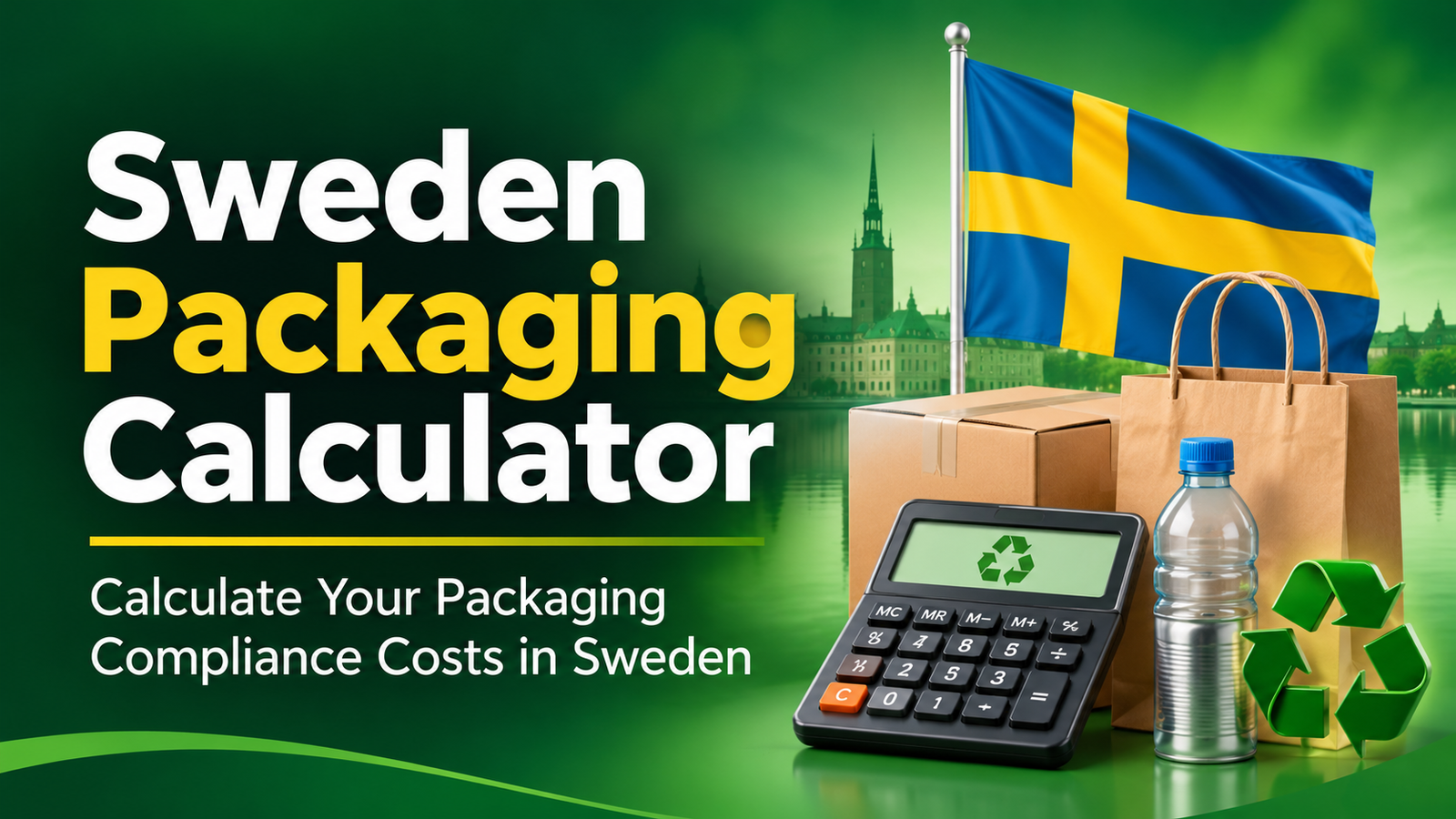
For international sellers, importers, and manufacturers, figuring out exact packaging weights, material breakdowns, and recurring fees can feel like navigating a maze of Swedish legislation and European Union mandates. That is where a dedicated Packaging calculator becomes indispensable.
At Complico Consulting GmbH, we help cross-border businesses simplify international compliance so they can focus on growth rather than administrative bottlenecks. In this comprehensive guide, we will break down Sweden's packaging laws, explain why accurate weight and fee estimation matters, and show you how a specialized Packaging calculator streamlines your compliance workflow.
Understanding Sweden's Packaging EPR Regulations
Before diving into how calculations work, it helps to understand the legal framework governing packaging in Sweden. Extended Producer Responsibility means that whoever places packaged goods onto the Swedish market is financially and legally responsible for the collection, sorting, and recycling of that packaging once the consumer throws it away.
In Sweden, packaging compliance is shaped by two major regulatory pillars:
- Swedish Packaging Ordinance (SFS 2022:1274): This national regulation requires all packaging producers to register with the Swedish Environmental Protection Agency (Naturvårdsverket) and affiliate with an approved Producer Responsibility Organization (PRO).
- The EU Packaging and Packaging Waste Regulation (PPWR – Regulation (EU) 2025/40): Taking direct effect across all EU member states starting August 12, 2026, the PPWR harmonizes packaging rules across Europe, refines the legal definition of a "producer," introduces strict recyclability grading, and enforces mandatory reporting standards.
The Zero-Threshold Rule
Unlike certain countries that offer exemptions for small businesses shipping low volumes, Sweden has a 0 kg threshold. If you ship even a single parcel to a customer in Sweden, or import one pallet of packaged goods into the country, you are legally considered a producer. Furthermore, major online marketplaces actively verify producer registration numbers before allowing sellers to list products for Swedish buyers.
Why You Need a Sweden Packaging Calculator
Many businesses initially attempt to manage their Swedish EPR reporting using manual spreadsheets. While that might work for a handful of SKUs, it quickly breaks down when dealing with multi-component packaging, seasonal shipments, and eco-modulated fee structures.
Using a specialized Packaging calculator eliminates guesswork and solves several critical operational challenges:
1. Accurate Material Separation
A single e-commerce shipment rarely consists of just one material. Consider a standard apparel order: you might have a corrugated cardboard outer box, tissue paper wrapping, a recyclable plastic polybag, a paper hangtag with a plastic string, and adhesive shipping tape. Swedish authorities require you to report exact weights broken down by distinct material categories—such as paper/cardboard, plastic, metal, glass, and wood. A Packaging calculator lets you build product profiles so every gram of tape, bubble wrap, and label is accounted for automatically.
2. Budgeting for Eco-Modulated Fees
In Sweden, you do not pay a flat rate per kilogram of waste. Approved PROs—specifically Näringslivets Producentansvar (NPA) and TMResponsibility (TMR)—apply eco-modulated tariffs. Packaging that is easy to sort and recycle in existing Swedish facilities incurs lower fees, whereas composite materials, non-recyclable plastics, or dark-colored polymers that confuse optical sorting machines cost significantly more per kilo. Running your packaging specs through a Packaging calculator helps you forecast annual compliance expenses accurately before you even launch a marketing campaign in Sweden. You can also review our pricing for compliance services.
3. Avoiding Costly Penalties and Back-Payments
Failing to register, missing reporting deadlines, or under-reporting packaging weights carries stiff financial consequences in Sweden. Naturvårdsverket enforces environmental sanction fees—such as SEK 10,000 for late reporting and SEK 30,000 for operating without an approved PRO affiliation—on top of retroactive recycling fees. Clean, verifiable data from a reliable calculation tool keeps your declarations audit-ready. For a broader view of enforcement trends, see our article on EU compliance fines.
4. Navigating the 2026 PPWR Transition
Because the EU PPWR shifted producer definitions mid-year on August 12, 2026, businesses reporting for the 2026 calendar year (due March 31, 2027) must carefully separate volumes placed on the market before and after that date. A structured Packaging calculator tracks shipment timelines alongside material weights, preventing double-reporting or compliance gaps during regulatory transitions. Learn more in our packaging compliance guide.
Key Inputs Required for Accurate Swedish Packaging Calculations
To get precise results from any Sweden Packaging calculator, you need to gather specific data points from your suppliers, warehouse, or third-party logistics (3PL) provider. Here is what goes into the calculation:
| Data Category | What You Need to Measure | Why It Matters in Sweden |
|---|---|---|
| Primary (Sales) Packaging | Bottles, jars, shoe boxes, polybags, blister packs, and product labels. | Classified as household/consumer packaging, which carries specific collection rates. |
| Secondary (Grouped) Packaging | Multi-pack cartons, shrink-wrap bundling multiple units together. | Must be tracked separately from individual retail units. |
| Tertiary (Transport & E-Commerce) Packaging | Shipping boxes, padded mailers, void fill, pallet stretch wrap, strapping, and tape. | E-commerce shipping materials count as household packaging when sent directly to consumers. |
| Component Unit Weights | Exact weight in grams per individual component. | Total annual weight is multiplied by material-specific PRO tariffs. |
| Composite & De Minimis Rules | Percentage share of secondary materials (e.g., plastic window on a paper box). | Under Swedish rules, minor materials under 5% can sometimes be allocated to the dominant material—unless specific exceptions like single-use plastic linings apply. |
| Annual Unit Volumes | Total number of each SKU or shipment type sold into Sweden. | Determines whether you report monthly (fees over SEK 120,000/year) or quarterly. |
Step-by-Step: How to Calculate Your Swedish Packaging Obligations
Whether you are preparing your initial registration or auditing your quarterly declarations, follow this straightforward process to calculate your packaging footprint:
Step 1: Audit Your Entire Packaging Bill of Materials (BOM)
Gather physical samples of every product you sell in Sweden, along with the shipping boxes and filler materials used by your warehouse. Weigh each component separately on a precision digital scale. Do not overlook small items like stickers, thermal shipping labels, cable ties, or silica gel packets.
Step 2: Classify Each Component by Material and Packaging Level
Group your weighed components into standard Swedish reporting categories:
- Paper and Cardboard (corrugated boxes, kraft paper, folding cartons)
- Plastic (LDPE mailers, PET bottles, PP tape, bubble wrap—distinguishing between rigid and flexible plastics where required)
- Metal (aluminum cans, steel tins, metal lids)
- Glass (clear and colored glass jars or bottles)
- Wood & Other Materials (wooden crates, corks, textiles)
At the same time, flag whether the packaging ends up with a private consumer (household packaging) or a business end-user (commercial/industrial packaging), as PRO fee schedules treat them differently.
Step 3: Check for Special Categories (Single-Use Plastics & Deposit Schemes)
Sweden enforces strict reporting on Single-Use Plastics (SUP)—such as food containers, beverage cups, lids, and lightweight carrier bags. For these items, you must calculate both the total weight and the exact unit count. Additionally, if you sell ready-to-drink beverages in metal cans or plastic bottles, they generally fall under Sweden's mandatory deposit-return system managed by Returpack (Pantamera) rather than standard PROs.
Step 4: Input Data into a Packaging Calculator
Enter the per-unit material weights and multiply them by your projected or actual Swedish order volumes. A reliable Packaging calculator automatically converts grams per shipment into total annual kilograms per material stream and applies current PRO tariff tiers.
Step 5: Review Reporting Frequency and Deadlines
Based on your calculated annual fee total:
- Below SEK 120,000 per year: You typically report quarterly (by the 25th of the month following each quarter: April, July, October, and January).
- Above SEK 120,000 per year: You must report monthly by the 25th of the following month.
- Annual Statutory Summary: All producers must ensure their annual figures are reconciled and submitted by March 31 of the following year.
How Complico Consulting GmbH Simplifies Swedish EPR Compliance
Calculating your packaging weights is only the first piece of the compliance puzzle. Once you know your numbers, you still need to register with Naturvårdsverket, select and onboard with the right Swedish PRO (NPA or TMR), appoint an Authorized Representative if your company lacks a local Swedish legal entity, and submit recurring declarations on time.
Complico Consulting GmbH serves as your dedicated compliance partner across Sweden and the broader European Union. Rather than leaving your team to interpret translated regulatory texts or wrestle with local portals, we provide end-to-end support tailored to your business model:
- Precision Packaging Assessment: We help you structure your SKU data, apply a calibrated Packaging calculator methodology, and verify material classifications—including composite rules and SUP declarations.
- Registration & PRO Onboarding: We handle your official registration with the Swedish Environmental Protection Agency and guide you through joining NPA or TMR based on whichever fee structure best fits your material mix.
- Authorized Representative Services: Under EU PPWR rules, foreign sellers without a physical establishment in Sweden must designate an Authorized Representative to fulfill producer obligations. Complico Consulting GmbH bridges this legal requirement seamlessly.
- Ongoing Reporting & Multi-Country Scaling: Selling into Sweden is rarely an isolated step. If you also ship to Germany, France, Austria, or other EU markets, we centralize your packaging data so you can manage all European EPR obligations under one roof.
Ready to get started? Contact our team today.
Frequently Asked Questions (FAQ)
1. What is a Sweden Packaging calculator and how does it work ?
A Sweden Packaging calculator is a compliance tool that helps businesses determine the total annual weight of packaging materials they place on the Swedish market and estimate their Extended Producer Responsibility (EPR) fees. By inputting the individual component weights (such as cardboard boxes, plastic mailers, and tape) per shipment and multiplying them by your Swedish sales volume, the tool categorizes materials according to Swedish Environmental Protection Agency (Naturvårdsverket) and PRO guidelines.
2. Is there a minimum weight or revenue threshold before I need to register in Sweden ?
No. Sweden enforces a 0 kg threshold for packaging EPR. Whether you ship one small parcel or ten thousand pallets into Sweden, you are legally obligated to register with Naturvårdsverket and join an approved Producer Responsibility Organization (NPA or TMR) before placing packaged goods on the market. (Note: While registration is mandatory from the first unit, producers placing less than one tonne of packaging per year may qualify for an exemption from Naturvårdsverket's annual SEK 1,250 supervisory fee, provided they do not place covered single-use plastics on the market.)
3. Does e-commerce shipping packaging count toward my Swedish EPR totals ?
Yes. If you ship orders directly to consumers in Sweden, you are responsible for both the primary product packaging (such as boxes, bottles, or polybags) and the secondary/shipping packaging (such as outer cardboard cartons, padded envelopes, bubble wrap, and packing tape). All of these materials must be weighed and included in your Packaging calculator totals.
4. What happens if my company is based outside Sweden ?
If your business does not have a registered legal entity in Sweden and sells directly to Swedish consumers (via your own online store or marketplaces), you are still considered the "producer" of the packaging. Under the EU Packaging and Packaging Waste Regulation (PPWR), foreign companies without a local branch must appoint an Authorized Representative established in Sweden to fulfill their EPR registration and reporting obligations. See our guide on EPR compliance for Amazon sellers for marketplace-specific insights.
5. What are the penalties for failing to report or under-reporting packaging in Sweden ?
Non-compliance in Sweden carries both financial and commercial risks. Naturvårdsverket issues environmental sanction fees—including SEK 10,000 for submitting annual reports late and SEK 30,000 for failing to affiliate with an approved PRO—alongside mandatory back-payments for unreported packaging volumes. Additionally, online marketplaces like Amazon and Zalando actively suspend listings from sellers who cannot provide valid Swedish producer registration proof.